

Quick answer
Daikoku Parking Area operates 24 hours daily with free entry, though Shuto Expressway tolls apply for vehicle access. The car meets peak Friday and Saturday nights between 19:00 and 23:00, when modified Skylines, Supras, and classic JDM machinery gather spontaneously. Weather and police presence influence turnout—summer and autumn weekends typically draw the largest crowds. Pedestrian access is possible via the nearby Daikoku-futo bus stop, though most visitors arrive by car or taxi.
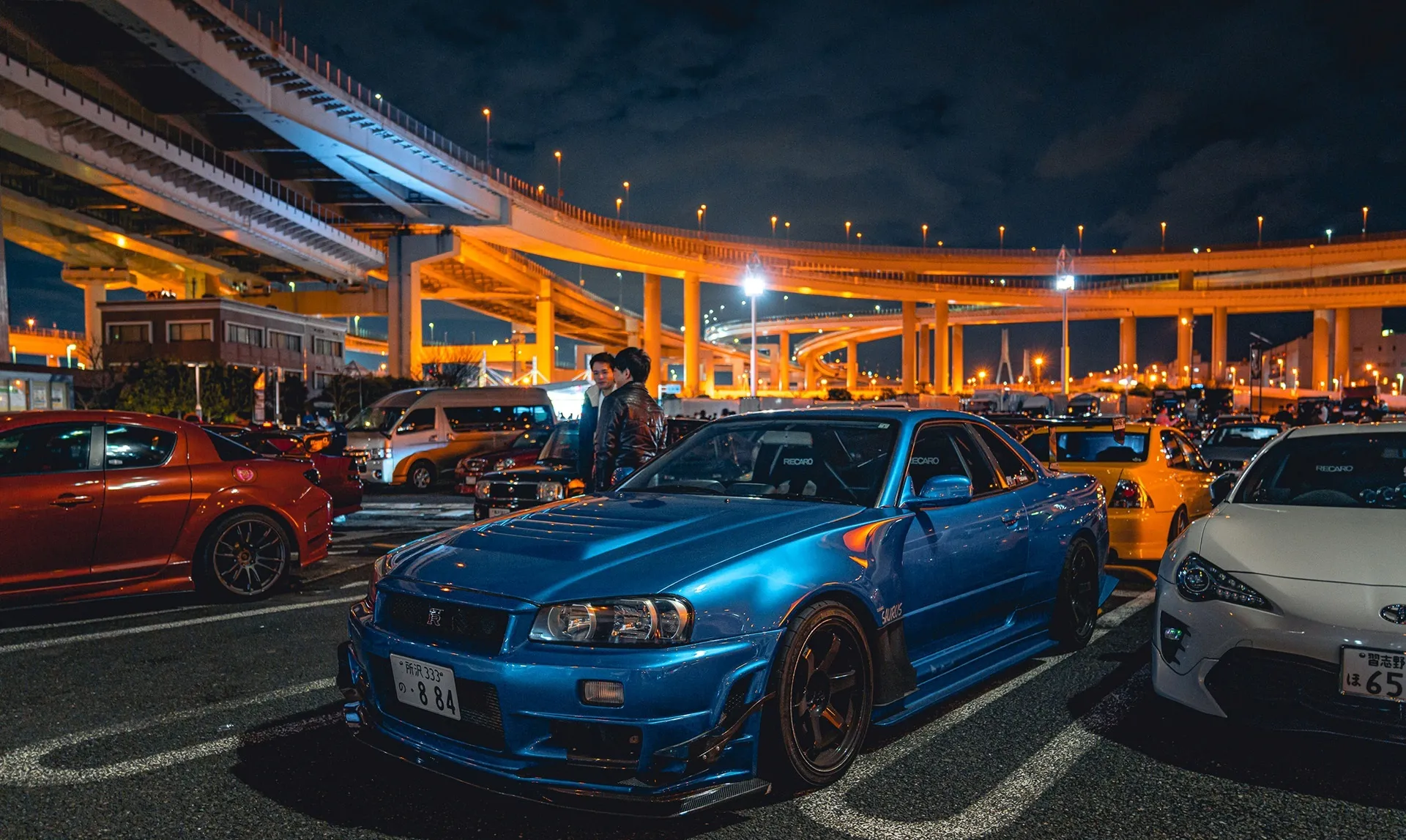
Every weekend, a section of asphalt meant for highway travelers becomes a rolling exhibition of Japan's tuning culture—no tickets, no gates, no formal organization. Daikoku Parking Area earned its reputation through decades of organic gatherings, where enthusiasts converge to display widebody kits, titanium exhaust systems, and engines producing triple their factory horsepower. The location's proximity to Tokyo and Yokohama, combined with its expressway accessibility, made it the default meeting point for a community that values accessibility over exclusivity. Tokyo JDM tours reviews consistently highlight the unpredictability factor. Unlike museum visits or scheduled track events, Daikoku's appeal lies in its spontaneity—one night might bring fifty cars, another three hundred. Weather dictates attendance more than any calendar. Rain clears the lot within an hour. Clear autumn evenings produce the densest turnout, especially when word spreads through Line groups and Instagram stories that rare builds are en route. The Bayshore Route itself carries significance; this is the expressway that inspired Tokyo Xtreme Racer video games and countless street racing stories from the 1990s. Guided JDM car culture experiences in Tokyo often include Daikoku as a waypoint, providing transportation and cultural context that independent visitors must research themselves. A guide explains why a particular Hakosuka Skyline draws crowds, or why that R34 GT-R's engine note signals a built RB26. They navigate expressway tolls, parking protocol, and the unwritten etiquette of photographing someone's build. Solo visitors have complete freedom but shoulder the responsibility of understanding Japanese highway systems and the social norms of a community that values respect over tourism. The experience divides cleanly: active meets versus empty pavement. Arriving at 14:00 on a Tuesday yields rows of parked trucks and vending machines. Arriving at 21:00 on a Saturday in October yields impromptu photo shoots, engine startups echoing off concrete barriers, and the smell of racing fuel mixing with convenience store coffee. Seasonal timing matters. Summer humidity brings motorcycles and late-night crowds. Winter cold thins attendance but surfaces serious builds whose owners don't mind the temperature. The metropolitan expressway's toll structure means each visit costs between 800 and 1,300 yen depending on entry point, a detail that shapes how often locals return versus how tourists plan a single pilgrimage.
“One night might bring fifty cars, another three hundred—weather dictates attendance more than any calendar.”
Best Time to Experience Tokyo JDM Tours Reviews: Arrival Windows
The best arrival window is 19:00–23:00, specifically on Friday and Saturday nights when JDM car meets are most active. Planning your visit during these hours provides the highest likelihood of observing the local car culture.
Friday Nights
High activity levelsMild to cool evenings
This is the peak time for car enthusiasts to gather and showcase vehicles.
Saturday Nights
Maximum attendanceMild to cool evenings
Expect the highest volume of cars and observers during this weekly peak.
Weekday Evenings
Moderate attendance—
Visits during the week offer a quieter atmosphere compared to the weekend surge.
Off-Peak Hours
Low attendance—
Early mornings or late weekdays provide more space for viewing the area with fewer crowds.
Verdict: The best time to visit for car culture visibility is Friday or Saturday night between 19:00 and 23:00.
Tokyo JDM Tours Reviews: Daikoku Parking Area Opening Hours
Daikoku Parking Area is accessible 24 hours a day, seven days a week. Please note that while the parking area itself remains open, individual facility operational hours may vary.
| Monday | 00:00–23:59 | |
|---|---|---|
| Tuesday | 00:00–23:59 | |
| Wednesday | 00:00–23:59 | |
| Thursday | 00:00–23:59 | |
| Friday | 00:00–23:59 | |
| Saturday | 00:00–23:59 | |
| Sunday | 00:00–23:59 |
Is Admission Free for Tokyo JDM Tours Reviews? Entry Details
Daikoku Parking Area does not charge an admission fee for visitors. Any costs associated with accessing the area depend entirely on vehicular travel and expressway tolls.
A typical visitor pays 0 JPY for entry, with the final cost determined solely by vehicle-specific expressway toll fees.
How to Arrive for Tokyo JDM Tours Reviews: Logistics and Access
Daikoku Parking Area is located on an artificial island in Yokohama, Kanagawa, at 15-157 Daikoku-futo, Tsurumi-ku. Because it is situated directly on the Shuto Expressway, it is inaccessible to pedestrians and lacks direct public transit stops.
Shuto Expressway Route K5 (Daikoku Route)
From Yokohama Station or Tsurumi Station
Departing from central Tokyo or Yokohama
Etiquette for Tokyo JDM Tours Reviews: Respecting Daikoku
Daikoku Parking Area hosts an informal car community that values discretion and mutual respect. Visitors should observe quietly, avoid disrupting meets, and never treat the space as a public attraction.
Do
- Stay in designated pedestrian areas and parking bays
- Ask permission before photographing someone's vehicle up close
- Keep noise levels low and conversations brief
- Leave the area cleaner than you found it
- Respect organizers and participants who may ask you to move on
Don't
- Don't obstruct traffic flow or block entry and exit lanes
- Don't touch vehicles or lean on cars without explicit owner permission
- Don't arrive in large tourist groups that overwhelm the space
- Don't use flash photography during active meets
- Don't linger if the community signals the gathering is private
Tokyo JDM Tours Reviews Checklist: Pre-Visit Essentials
Prepare these items and logistics before heading to Daikoku for the late-night car meet.
-
Check expressway toll payment method — You'll need ETC card or cash for expressway access to the parking area.
-
Charge your camera and phone — Low light photography drains batteries quickly during night shoots.
-
Bring a light jacket — Evenings can be cool even in summer, especially when standing outside for extended periods.
-
Download offline maps — Mobile signal can be weak in the industrial port area at night.
-
Plan your return transport — Last trains leave before the meet ends; ride-share apps may have limited availability after midnight.
-
Respect the car culture — This is a community gathering, not a spectacle—engage respectfully with owners before photographing their builds.
Check availability
Frequently Asked Questions About Tokyo JDM Tours Reviews
Everything you need to know about tokyo jdm tours reviews