

Quick answer
JDM car prices in Japan span a wide range depending on model, condition, and rarity. A clean R32 Skyline GT-R typically runs ¥3–6 million at auction, while S13 Silvias start around ¥800,000 for well-maintained examples. Iconic models like the A80 Supra can exceed ¥8 million in low-mileage condition. Prices fluctuate with global demand, yen exchange rates, and export restrictions, making timing and research essential for serious buyers.
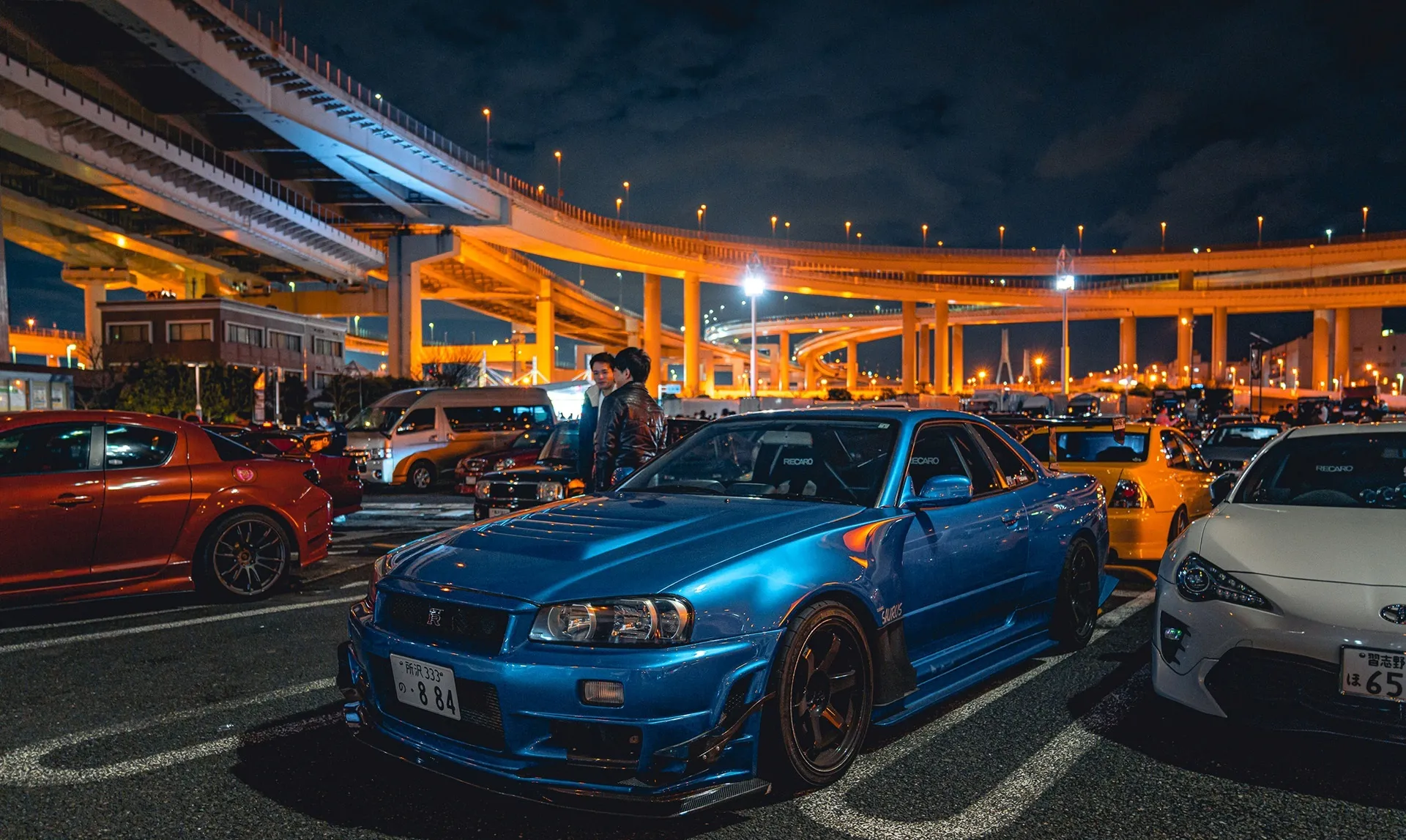
Daikoku Parking Area has become an unofficial showroom for Japan's most coveted performance machines, but the cars parked under its expressway overpass represent a spectrum of investment levels that confuses many first-time visitors. The notion that Japanese domestic market vehicles trade at bargain prices collapsed years ago as international collectors discovered what Tokyo enthusiasts already knew. Pricing for iconic models reflects three distinct tiers. Entry-level platforms like the S13 Silvia, AE86 Corolla, and NA Miata occupy the ¥800,000–1.5 million range when sourced through Japanese auctions, though condition varies dramatically and restoration costs can double the purchase price. Mid-tier legends including the R32 and R33 Skyline GT-R, FD RX-7, and SW20 MR2 Turbo now command ¥3–5 million for sorted examples with documented service history. The top tier—A80 Supras with the 2JZ-GTE, R34 GT-Rs in desirable colors, and low-production variants like the NSX Type R—routinely break ¥8–15 million at specialist auctions, with some R34 V-Spec IIs reaching ¥20 million when mileage stays below 30,000 kilometers. Several forces shape how much do JDM cars cost in Japan beyond simple supply and demand. The 25-year import rule in the United States created cyclical spikes as chassis years become eligible for legal entry, pushing R34 values skyward since 2024. Simultaneously, Japan's domestic registration taxes penalize older vehicles, incentivizing owners to sell rather than renew, which stabilizes supply for certain age brackets. Auction grade matters more than odometer readings—a 4.5-grade car with 80,000 kilometers often trades higher than a 3.5-grade example showing half the mileage, because Japanese inspectors penalize rust, repaints, and accident history with precision that Western buyers overlook. Buyers exploring the Tokyo car market should distinguish between auction hammer prices, dealer asking prices, and the landed cost after export fees, shipping, and compliance work. What appears affordable in yen terms expands significantly once freight, port handling, and destination-country modifications enter the equation. The cars rolling into Daikoku on Friday and Saturday nights represent the upper end of condition and modification quality, and their owners typically reject casual offers. Serious transactions happen through established export agents who source vehicles from USS Tokyo, JU Saitama, and regional auction houses where transparent grading and title verification protect buyers from the cosmetic restorations that plague peer-to-peer sales.
“Auction grade matters more than odometer readings in Japan's domestic market, where inspectors penalize rust and accident history with precision that most foreign buyers overlook.”
Understanding How Much Do JDM Cars Cost In Japan and Ownership Realities
Visiting Daikoku Parking Area primarily requires accounting for transportation costs, as the facility itself is free to enter. While you will observe many vehicles, please note that this is a public meeting space, not a dealership, and cars are not for sale here.
How to spend less
- Use public transport to the nearest station then a taxi
- Avoid private tours to control your own schedule
- Pack snacks as food options are limited
For a typical visitor, the realistic cost ranges from 5,000 JPY to 15,000 JPY depending on your choice of private transport versus taxi transit.
Entrance Fees and Costs Regarding How Much Do JDM Cars Cost In Japan
Access to Daikoku Parking Area is free of charge for all visitors. Costs are associated only with the mandatory expressway tolls required to reach the facility by vehicle.
A typical visitor pays 0 JPY for entry, though total costs depend on the specific expressway tolls incurred during transit.
Operational Hours for Visiting Daikoku When Researching How Much Do JDM Cars Cost In Japan
Daikoku Parking Area is open to the public twenty-four hours a day, seven days a week. Please be aware that local authorities may implement temporary closures of the facility if congestion becomes excessive, which impacts the ability to observe car culture enthusiasts.
| Monday | 00:00–23:59 | |
|---|---|---|
| Tuesday | 00:00–23:59 | |
| Wednesday | 00:00–23:59 | |
| Thursday | 00:00–23:59 | |
| Friday | 00:00–23:59 | |
| Saturday | 00:00–23:59 | |
| Sunday | 00:00–23:59 |
Best Time To Visit To Observe JDM Cars Beyond How Much Do JDM Cars Cost In Japan
To observe the highest density of modified vehicles at Daikoku Parking Area, prioritize arriving during the evening hours on Friday and Saturday. These windows provide the most consistent turnout for the local car enthusiast community.
Friday and Saturday nights
High density of modified vehiclesMild to warm; 15°C to 28°C
These nights serve as the primary gathering times for enthusiasts. Arriving early is necessary to avoid potential police closures due to high traffic volume.
Weekday evenings
Moderate attendanceVaried by season
Expect a quieter environment with fewer modified cars compared to the weekend. This time is better for those who prefer observing without peak congestion.
Daytime hours
Low attendanceVaried by season
The parking area functions primarily as a rest stop during the day. Very few enthusiasts congregate here outside of evening hours.
Verdict: The best arrival window is 17:00–20:00 on Friday or Saturday nights, as these times maximize the chance of seeing a high density of modified vehicles.
Getting To Daikoku Parking Area When Analyzing How Much Do JDM Cars Cost In Japan
Daikoku Parking Area is located at 15 Daikoku-futo, Tsurumi-ku, Yokohama, Kanagawa, Japan. It is situated on an expressway island that is not accessible via public transportation, making a private vehicle or booked transport the only way to reach it.
Metropolitan Expressway Route K5 (Daikoku Route)
Private hire from Yokohama Station
Check availability
Common Questions About JDM Car Culture and Daikoku Parking Area
Everything you need to know about how much do jdm cars cost in japan